

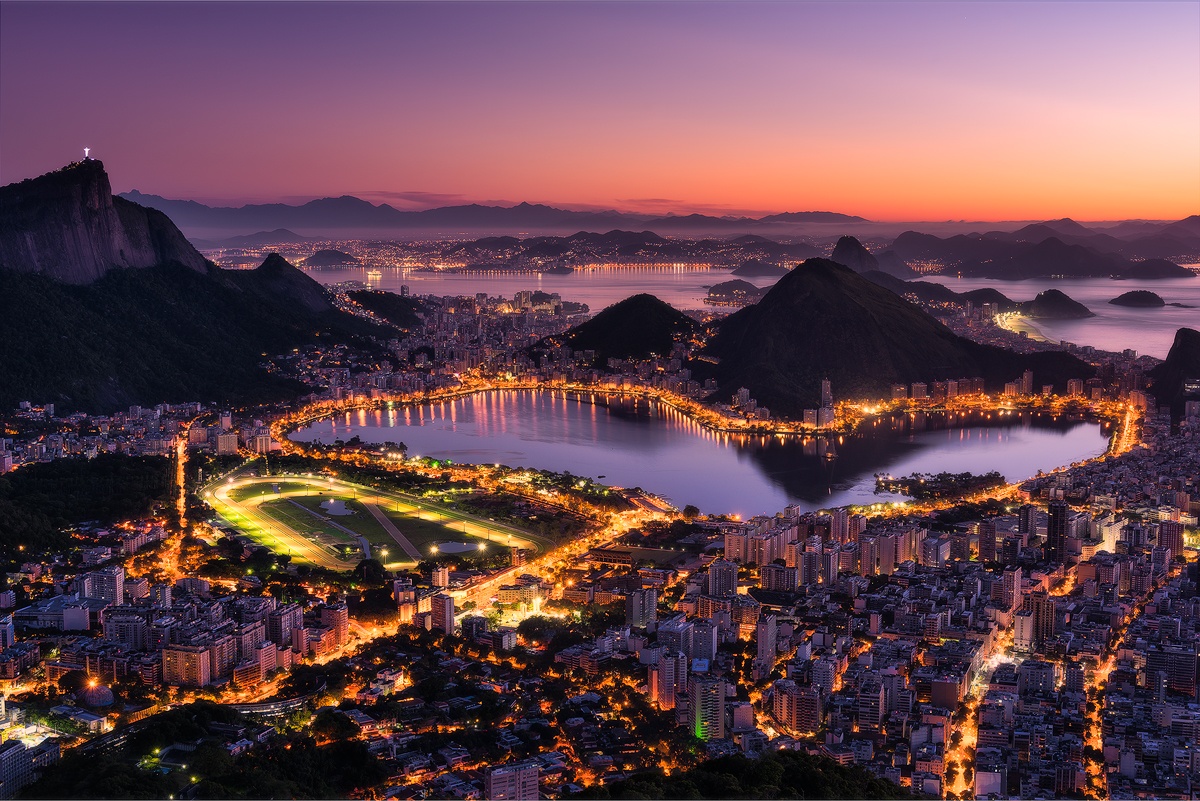
Rio de Janeiro is one of the most internationally recognized cities in South America and a leading tourism destination in Brazil. Located on the southeastern coast of the country along the Atlantic Ocean, the city is known for its dramatic natural setting, cultural traditions, and historical development. Tourism in Rio de Janeiro combines coastal recreation, urban exploration, and large-scale cultural events.
Natural Setting and Iconic Landmarks
Rio de Janeiro is distinguished by its geography. Granite mountains rise directly from the ocean, forming a landscape where beaches, forests, and urban districts coexist in close proximity. One of the city’s most prominent landmarks is Christ the Redeemer, located atop Corcovado Mountain. The monument overlooks the city and has become a symbol not only of Rio but of Brazil as a whole.
Another major natural attraction is Sugarloaf Mountain, accessible by cable car. From its summit, visitors can observe panoramic views of Guanabara Bay, the Atlantic coastline, and the surrounding neighborhoods. These viewpoints contribute significantly to the city’s visual identity and tourism appeal.
Beaches are central to Rio’s image. Copacabana Beach and Ipanema Beach attract both residents and visitors. These coastal areas serve as recreational spaces for swimming, sports, and social gatherings, reflecting the city’s outdoor-oriented lifestyle.
Urban Culture and Neighborhoods
Rio de Janeiro consists of diverse neighborhoods with distinct characteristics. The historic center contains colonial-era architecture, churches, and cultural institutions. In contrast, the South Zone is known for beachfront districts and tourism infrastructure. Areas such as Santa Teresa preserve a more traditional atmosphere, with narrow streets and hillside views.
Public spaces contribute to the urban tourism experience. Parks, waterfront promenades, and restored port areas provide venues for events and daily recreation. The city’s integration of natural and built environments allows visitors to move between beaches, forests, and cultural districts within short distances.
Cultural Events and Festivals
Cultural tourism plays a major role in Rio’s global recognition. The Rio Carnival is one of the largest festivals in the world, attracting international visitors each year. The event features samba school parades, street celebrations, music, and dance performances. Carnival has both economic and cultural significance, highlighting local artistic traditions.
Music and dance are essential aspects of Rio’s identity. Samba, bossa nova, and other Brazilian genres are performed in clubs, cultural centers, and public events. Museums and theaters provide insight into Brazil’s artistic heritage and contemporary creativity.
Nature and Environmental Tourism
Beyond its beaches, Rio offers access to natural reserves. The Tijuca Forest, one of the largest urban rainforests in the world, provides hiking trails, waterfalls, and wildlife observation within city limits. Eco-tourism activities such as guided forest walks and boat tours in Guanabara Bay add diversity to the tourism sector.
Practical Information
Best time to visit: May to October for milder temperatures
Climate: Tropical, with warm summers and moderate winters
Transportation: International airport, metro system, buses, and taxis
Accommodation: Hotels, guesthouses, and short-term rentals
Tourism in Rio de Janeiro is shaped by its combination of natural landscapes, cultural vitality, and historical development. The city’s coastal setting, major landmarks, and internationally recognized festivals contribute to its position as a global destination. For visitors, Rio offers a multifaceted experience that reflects both the complexity and the energy of modern Brazil.