

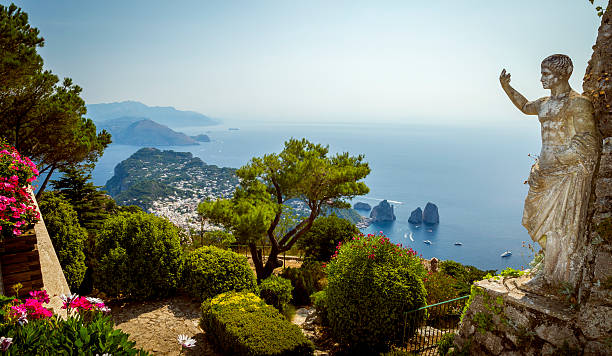
The island of Capri is one of Italy’s most recognized coastal destinations, located in the Tyrrhenian Sea off the southern edge of the Gulf of Naples. Though small in size, Capri has long held a significant place in Mediterranean tourism due to its dramatic cliffs, clear waters, historical sites, and cultivated atmosphere. Over time, the island has developed a reputation for combining natural beauty with refined leisure travel.
Geography and Natural Attractions
Capri’s landscape is defined by steep limestone cliffs rising sharply from the sea, creating a striking coastal profile. One of the island’s most famous natural landmarks is the Blue Grotto, a sea cave illuminated by a distinctive blue light caused by sunlight passing through an underwater opening. Accessible by small boat, the grotto remains one of Capri’s primary attractions.
Another recognizable feature is the Faraglioni rock formations, which stand offshore and are visible from various viewpoints along the coast. Scenic walking paths connect different parts of the island, offering panoramic views over the sea and the Bay of Naples. Gardens such as the Gardens of Augustus provide landscaped terraces overlooking the Faraglioni and the winding Via Krupp below.
Towns and Urban Character
Capri consists mainly of two municipalities: Capri and Anacapri. The town of Capri is known for its central square, Piazzetta, which functions as a social and cultural focal point. Narrow streets branch out from the square, lined with boutiques, cafés, and historic buildings.
Anacapri, situated at a higher elevation, offers a quieter atmosphere. From here, visitors can access Monte Solaro, the island’s highest point, which provides expansive views of the surrounding sea and mainland. The distinction between the two towns allows visitors to experience both vibrant and more tranquil environments within a compact area.
Historical and Cultural Heritage
Capri’s tourism history dates back to Roman times. The island served as a retreat for Emperor Tiberius, who constructed several villas there. The remains of Villa Jovis are among the most significant archaeological sites on the island. These ruins offer insight into Capri’s role as a place of residence and reflection during the Roman Empire.
In the nineteenth and early twentieth centuries, Capri attracted artists, writers, and intellectuals from across Europe. This legacy continues to shape the island’s cultural identity, influencing its architecture, hospitality traditions, and artistic reputation.
Coastal and Marine Tourism
Boat excursions around the island are a central component of tourism. Visitors can explore hidden coves, sea arches, and swimming areas accessible only by water. The clarity of the sea supports activities such as swimming and snorkeling, particularly during the warmer months.
While Capri is often associated with luxury tourism, it also accommodates day visitors arriving by ferry from Naples, Sorrento, and the Amalfi Coast. Seasonal variations influence tourism flows, with summer representing the peak period and spring and early autumn offering milder conditions.
Practical Information
Best time to visit: April to June and September to October
Climate: Mediterranean, with warm summers and mild winters
Access: Ferry and hydrofoil connections from Naples and surrounding coastal towns
Accommodation: Hotels, villas, and guesthouses
Tourism on the island of Capri is shaped by a combination of natural formations, historical continuity, and cultivated urban life. Despite its limited size, the island offers diverse experiences ranging from archaeological exploration to coastal leisure. Capri’s long-standing role as a Mediterranean retreat continues to define its appeal within Italian and international tourism.