

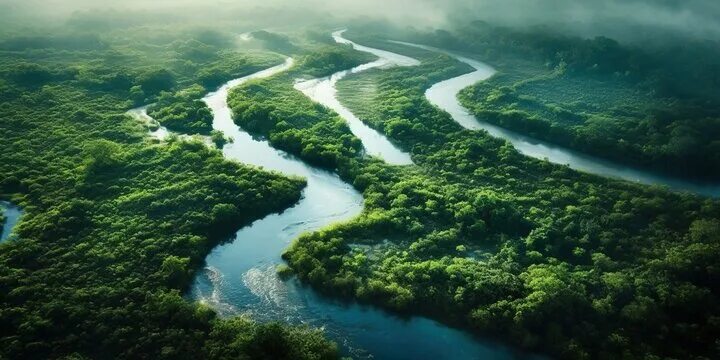
The Congo region, located in Central Africa, is one of the most ecologically significant areas in the world. Dominated by the vast Congo Basin, it contains the second-largest tropical rainforest after the Amazon. Tourism in this region is still developing, but it offers unique opportunities for travelers interested in biodiversity, remote landscapes, and scientific exploration.
Geography and Natural Environment
At the center of the region lies the Congo Basin, a vast area of dense tropical forest that extends across several countries, including the Democratic Republic of the Congo. This ecosystem plays a crucial role in global climate regulation and supports a wide range of plant and animal species.
The Congo River is one of the world’s largest rivers by volume. It serves as a key transportation route and a central feature of the region’s geography. River travel provides access to remote areas and offers insight into local communities and ecosystems.
National Parks and Wildlife Tourism
One of the main attractions of tourism in the Congo is its wildlife. The region is home to rare and endangered species, including forest elephants, okapis, and several types of primates. The most notable among them is the mountain gorilla, which can be observed in protected areas under strict conservation guidelines.
Virunga National Park, Africa’s oldest national park, is one of the key destinations for eco-tourism. Located in the eastern part of the country, it features diverse landscapes, including volcanic mountains, forests, and savannas. The park is known for gorilla trekking, as well as for its active volcanoes, such as Mount Nyiragongo.
Another important conservation area is Kahuzi-Biega National Park, which is recognized for its population of eastern lowland gorillas. These parks are part of international efforts to protect endangered species while allowing controlled tourism activities.
Cultural and Local Experiences
Tourism in the Congo is not limited to natural attractions. The region is home to numerous ethnic groups, each with distinct languages, traditions, and cultural practices. Visitors may encounter traditional music, dance, and crafts that reflect long-standing cultural identities.
Urban centers such as Kinshasa offer a different perspective on Congolese life. As one of Africa’s largest cities, Kinshasa is a center for music, art, and contemporary culture. Local markets, galleries, and performance spaces contribute to a dynamic urban environment.
Challenges and Development of Tourism
Tourism in the Congo remains limited compared to other African destinations due to infrastructure constraints and security considerations in certain regions. Access to remote areas can be difficult, and organized tours are often necessary for travel outside major cities.
However, interest in sustainable tourism is increasing. Conservation organizations and local communities are working to develop tourism in ways that support environmental protection and economic development. Responsible travel practices are essential to ensure that tourism benefits both ecosystems and local populations.
Practical Information
- Best time to visit: June to September and December to February (drier seasons)
- Climate: Tropical, with high humidity and seasonal rainfall
- Language: French widely used; many local languages spoken
- Travel conditions: Organized tours recommended in most regions
Tourism in the Congo offers a distinctive experience centered on biodiversity, remote landscapes, and cultural diversity. While the sector is still developing, it provides opportunities for travelers interested in ecological and scientific exploration. With continued investment in conservation and infrastructure, the Congo region has the potential to become a more accessible destination while maintaining its environmental significance.