

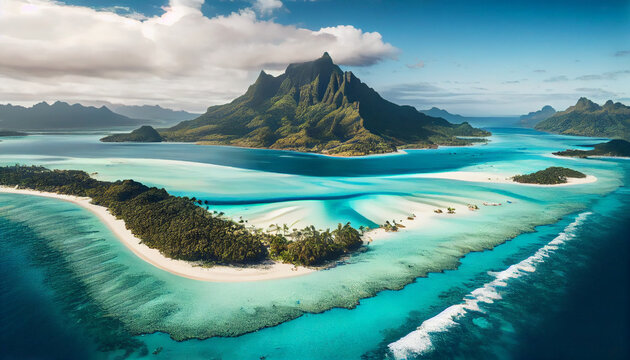
French Polynesia is an overseas collectivity of France located in the South Pacific Ocean. Consisting of more than one hundred islands and atolls spread across a vast maritime area, it is one of the world’s most recognized tropical tourism destinations. Tourism in French Polynesia is centered on lagoon environments, marine biodiversity, Polynesian culture, and remote island landscapes.
Geography and Island Groups
French Polynesia is divided into several island groups, including the Society Islands, Tuamotu Archipelago, Marquesas Islands, Gambier Islands, and Austral Islands. The most visited region is the Society Islands, where Tahiti serves as the administrative and transportation center.
Tahiti contains the capital city, Papeete, which functions as the main entry point for international visitors. The island combines volcanic mountains, waterfalls, black-sand beaches, and urban infrastructure. Although Tahiti is often the starting point of travel in the region, many tourists continue onward to smaller islands.
Among these destinations, Bora Bora is internationally known for its lagoon and overwater resorts. Surrounded by coral reefs and dominated by a volcanic peak, the island has become closely associated with luxury tourism. Nearby islands such as Moorea and Raiatea offer similar natural scenery with less intensive development.
Marine Tourism and Water Activities
Marine environments are central to tourism in French Polynesia. Clear lagoons and coral reef systems support snorkeling, scuba diving, sailing, and paddleboarding. The region’s biodiversity attracts visitors interested in observing tropical fish, rays, sea turtles, and sharks in protected marine ecosystems.
Whale watching has also become an important seasonal activity. During migration periods, humpback whales travel through Polynesian waters, particularly near the Society Islands. Regulations are designed to manage tourism activity while minimizing environmental impact.
The Tuamotu Archipelago, composed largely of coral atolls, is especially known for diving tourism. Strong underwater visibility and reef formations make the area significant for experienced divers.
Polynesian Culture and Traditions
Cultural tourism is another major aspect of travel in French Polynesia. Traditional Polynesian music, dance, and crafts remain visible in public celebrations and local communities. Dance performances accompanied by percussion instruments are commonly organized for visitors, reflecting cultural traditions that have been preserved across generations.
Handicrafts such as wood carving, weaving, and shell jewelry are sold in markets and artisan workshops. Traditional navigation and canoe-building practices are also part of cultural heritage programs.
The annual Heiva i Tahiti is one of the region’s most important events. It includes dance competitions, music, sports, and cultural exhibitions that attract both residents and international visitors.
Nature and Eco-Tourism
Beyond beaches and resorts, French Polynesia contains mountainous interiors, rainforests, and protected ecosystems. Hiking routes on islands such as Moorea and Tahiti lead through valleys, tropical forests, and volcanic terrain. Eco-tourism initiatives increasingly focus on conservation, particularly regarding coral reefs and marine habitats.
Many islands maintain relatively low population density, allowing tourism to develop in connection with natural landscapes rather than large-scale urbanization.
Cuisine and Local Hospitality
Cuisine in French Polynesia combines Polynesian traditions with French culinary influence. Seafood, coconut, tropical fruits, and root vegetables are common ingredients. One well-known dish is poisson cru, prepared with raw fish marinated in lime juice and coconut milk.
Accommodation ranges from international luxury resorts to family-operated guesthouses and eco-lodges. Smaller-scale lodging options provide visitors with opportunities to experience local communities and island lifestyles more directly.
Practical Information
- Best time to visit: May to October during the drier season
- Climate: Tropical, with warm temperatures year-round
- Currency: CFP Franc (XPF)
- Transportation: International flights to Tahiti, domestic flights, and ferries between islands
Tourism in French Polynesia is shaped by the relationship between ocean environments and Polynesian cultural traditions. The region’s islands offer a combination of marine recreation, ecological diversity, and cultural heritage within a remote Pacific setting. As sustainable tourism becomes increasingly important, French Polynesia continues to balance international travel demand with environmental preservation and local identity.